Every building type stresses its roof in different ways, and the inspection has to follow the stress. The checklist below is what we prioritize on each kind of property, and why those items come first.
Warehouse and industrial
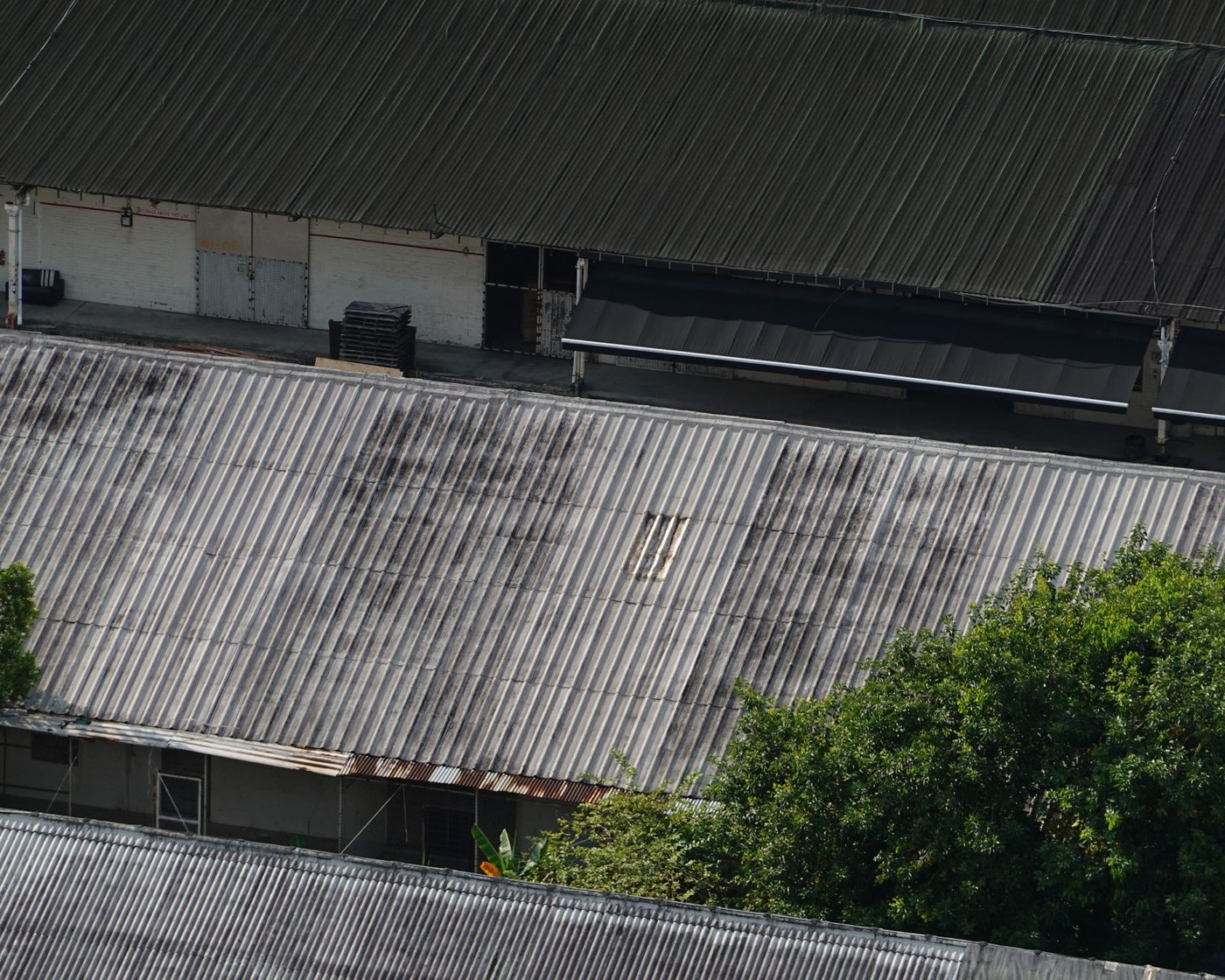
Large, simple roofs with long drainage runs. We focus on ponding, drain capacity, fastener backout on metal roofs, and damage from forklifts or equipment on the roof.
The defining feature of a big roof is distance. Water has a long way to travel before it reaches a drain, so a small settlement in the deck creates ponding that would drain away on a smaller building. Standing water shortens membrane life and adds weight, and on a wide span structure that weight is worth taking seriously. We check slope toward every outlet, drain strainers and clamping rings, and overflow provision.
Industrial roofs add process exhaust. Fumes, heat and chemical discharge can attack a membrane directly, so the area around every stack is treated as a separate detail rather than part of the field.
Retail and shopping centers
Many tenants, many rooftop units and frequent service traffic. We focus on curbs, penetrations, damage left by HVAC trades, and roof sections owned by different parties.
Ownership boundaries matter more here than anywhere else. A center may have landlord roof, tenant maintained sections and a common area with a separate budget, and a leak in a tenant space frequently starts over somebody else’s demise line. The report records which section each defect sits in so the repair goes to the right budget the first time.
HOA and multifamily
Several buildings, often with mixed roof types and ages. We document each building separately so boards can plan reserves and phase work.
Phasing is the real deliverable. Few communities can replace every roof at once, so the report ranks buildings by urgency and suggests an order, which lets a board fund replacements across several years instead of defending one very large assessment.
Office buildings
Parapets, roof drains and equipment screens are common trouble spots. We check flashing heights and drainage around mechanical areas.
Offices concentrate plant in one area, and that plant needs servicing. Screens, walkways, cable trays and condensate lines all sit on the membrane, and each support is a point where water can enter. We photograph the mechanical zone as its own section because it produces a disproportionate share of findings.
Hospitality
Hotels and resorts need inspections scheduled around guests. We focus on kitchen exhaust areas, where grease can damage some membranes, and on roof areas above guest rooms.
Above guest rooms the tolerance for a leak is close to zero, since a single stain takes a room out of service. That justifies closer attention to details in those bays and faster action on anything rated urgent.
Healthcare, education and self storage
Clinical and teaching buildings share a scheduling problem and a low tolerance for water over sensitive spaces, so inspections are planned around clinic hours or terms and the report flags roof areas over critical rooms. Self storage runs the opposite way: simple roofs, low traffic, but long runs of ridge and eave detail where wind driven rain enters, and tenants who discover a leak weeks after it starts.
What stays the same
The building type changes the priorities, not the method. Every inspection covers the same ground in the same order:
| Always checked | Why it matters |
|---|---|
| Drains, scuppers and ponding | Standing water shortens the life of nearly every membrane |
| Seams and laps | The most common failure on single ply roofs |
| Flashing at walls, curbs and parapets | Most leaks begin where the roof meets something else |
| Penetrations and equipment supports | Each one is a hand sealed detail |
| Evidence inside the building | Deck staining and corrosion are invisible from above |
What the building type changes is where we spend the time. On a warehouse the hours go into drainage and the long field. On a retail center they go into curbs and equipment. Same checklist, different weighting, and that weighting is agreed in the scope before anyone arrives.
Multiple buildings or locations
For portfolios, we inspect on a single schedule and deliver reports in one format so you can compare roofs side by side. Ask about an annual program on the services page, see where we work on the locations page, or see how pricing works.
Common questions
Which commercial building types have the most roof problems?
Retail centers and restaurants, for their size. They combine heavy rooftop equipment, grease laden kitchen exhaust and constant service traffic from trades who do not own the roof.
- Warehouses have fewer problems per square foot but one leak reaches more stock
- Every penetration is a detail sealed by hand, and hand work is where failure starts
- A crowded roof simply has more chances to fail
- Age and maintenance history then decide the rest
A retail roof nobody has cleaned is in worse condition than an older warehouse roof inspected twice a year. Rank a portfolio by penetration count, traffic and maintenance record rather than by install date, and start the inspections at the top of that list.
How does rooftop HVAC equipment affect a retail roof?
In three ways. Each unit sits on a curb that has to be flashed and sealed, each attracts service visits that damage the membrane, and each drains condensate onto the roof.
- The units themselves rarely leak, the details and the traffic around them do
- Technicians drop screws, drag hoses and set equipment down on cold stiff membrane
- Walkway pads between the hatch and the units keep feet off the membrane
- Make written reporting and photographs a condition of roof access for any trade
A cluster of punctures in a straight line is usually tracing somebody's shortest route across the roof. Ask for the service routes to be photographed when the roof is inspected.
Can one inspection cover several buildings on the same site?
Yes, and it is usually cheaper per building than booking them separately, because the crew mobilizes once and moves between roofs on foot.
- Insist each building is reported separately even though the visit was one trip
- Roofs on one site are rarely the same age or in the same condition
- A combined report that averages several roofs hides the variation you need
- Ask for a site plan that numbers the buildings the same way every year
You want a condition page per building that can stand alone in front of a board or a lender, and one summary table ranking every roof by urgency. Send us the addresses and approximate areas and we will scope the visit.
What should an HOA board ask for in a roof inspection report?
A building by building report with photographs, a remaining life estimate for each roof, and a replacement sequence with indicative timing.
- Split repairs needed now, repairs that can wait a year, and replacement
- Use the numbering the community already uses, not the inspector's own scheme
- Plain language a volunteer can read and an owner can be shown
- Keep every report, because boards turn over and memories fade
Those three categories come from different budget lines and different approval processes. A dated series showing the same roof over several years is the strongest answer a board has when owners ask why the reserve contribution is rising. Ask for that format before the inspection is booked.
How do you inspect a hotel roof without disturbing guests?
By scheduling around occupancy and access. Work happens during quiet hours, access is routed through service areas rather than guest corridors, and anything noisy is planned with the general manager.
- Walking, photographing and taking moisture readings makes little noise
- Ladder or lift setup, hatch access and core cutting are the disruptive steps
- Core sampling is timed so that it does not land above occupied rooms
- Kitchen exhaust grease and pool ventilation attack membrane, flashing and fasteners
Those last two are the findings a hospitality roof most often produces and the two most often missed, so ask for both to be photographed separately. Tell us your quiet hours when you book.